Best Massage Chairs for Neck Pain: 2026 Buyer's Guide
Table of Contents
- What Makes a Massage Chair Effective for Neck Pain
- Massage Chair Neck Rollers: What to Look For
- How Long to Use a Massage Chair for Neck Pain
- Massage Chair Safety for Cervical Spine Conditions
- Zero Gravity, Heat Therapy, and Body Scanning
- How to Match a Chair to Your Height and Body Type
- What to Know Before You Buy
- Frequently Asked Questions
Last Updated: September 22, 2026
What Makes a Massage Chair Effective for Neck Pain
Massage chairs for neck pain actually help when they deliver rollers to the base of the skull, not just the upper back, and let you control how hard they press.
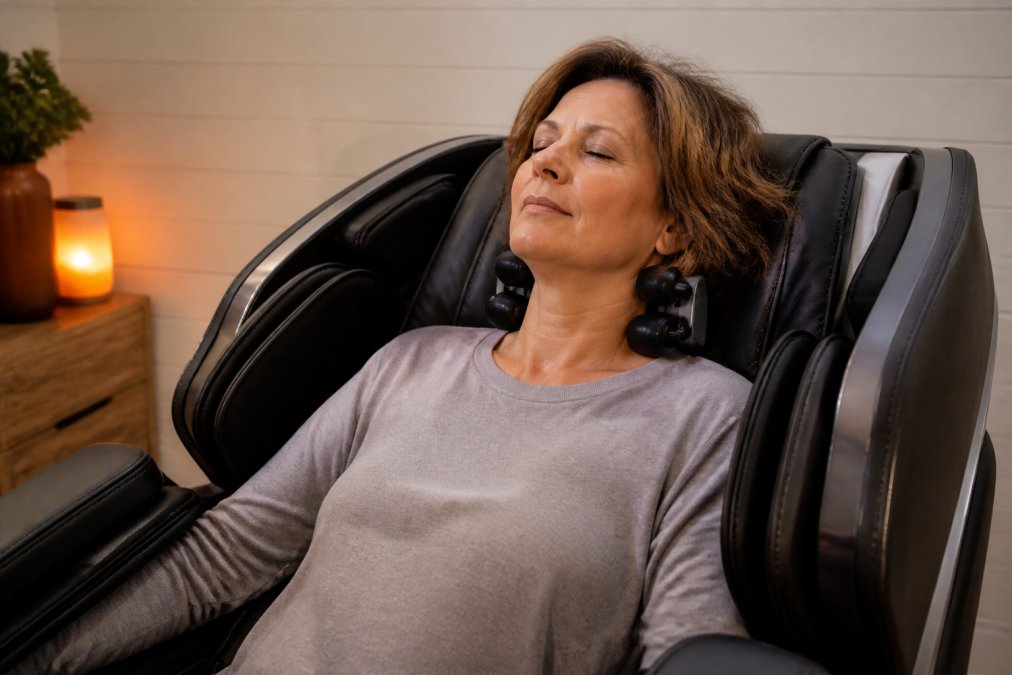
Here's what to check before anything else.
Roller Reach and Neck Coverage
The neck sits at the top of the cervical spine, a curve most chair mechanisms cannot follow. A short track stops at the shoulder blades and never contacts the muscles that cause most tension headaches.
4D Technology and Intensity Control
4D massage technology adds depth and speed control to the standard up-down-and-in-out motion of 3D rollers, so the chair can press deeper into a knot on one pass and ease off on the next.
Massage Chair Neck Rollers: What to Look For
Massage chair neck rollers are the mechanical nodes that knead and compress the muscles along the cervical spine and shoulders. Their shape, spacing, and travel path determine whether the massage feels therapeutic or mechanical.
Three design details matter most:
- Reach: Rollers should travel to the occiput, not stop at the shoulders
- Spacing: Width should adjust to your frame so rollers sit on muscle, not bone
- Coverage: Shoulder airbags should complement the rollers, not replace them
Shiatsu vs. Kneading vs. Percussion
Each technique suits a different stage of tension.
Shiatsu uses firm, stationary pressure on specific points. It works well for deep, fixed knots but can feel intense on an inflamed neck.
How Long to Use a Massage Chair for Neck Pain
With massage chairs for neck pain, a typical session should run 10 to 15 minutes on the neck and shoulders, once or twice a day. Longer sessions rarely help and can leave muscles sore.
A few practical guidelines:
- Beginner: 5-10 minutes, low intensity, once daily
- Regular user: 10-15 minutes, moderate intensity, once or twice daily
- Maintenance: 15-20 minutes as part of a broader recovery routine
Massage Chair Safety for Cervical Spine Conditions
Massage chair safety for cervical spine conditions comes down to knowing when pressure helps and when it risks harm. Mechanical rollers apply force you cannot feel your way through the way a therapist can.
When to Avoid or Limit Use
Skip the chair, or limit it to the gentlest settings, if you have:
- A recent neck injury or whiplash
- Diagnosed disc problems or spinal instability
- Osteoporosis or a history of compression fractures
- An active infection, fever, or acute inflammation
- Numbness, tingling, or weakness radiating into the arms
Zero Gravity, Heat Therapy, and Body Scanning
Zero gravity positioning reclines the chair until your knees sit above your heart, taking pressure off the lower spine and letting the neck relax into the rollers. A supported neck accepts deeper, more effective pressure.
How to Match a Chair to Your Height and Body Type
Height is the most overlooked fit factor in massage chairs and the most common reason a chair that feels great in a showroom causes neck pain at home. A roller track is a fixed-length arc and your cervical spine is a fixed-length curve; when those arcs don't line up, the rollers land on the wrong tissue.
Why Roller Alignment Breaks Down by Height
An SL-track chair is engineered around an average torso length, with the top of the track, where the neck rollers park, set to reach the occiput on that average frame. Two things go wrong when you deviate:
- Shorter users (roughly under 5'4"): The occiput sits lower than the track's top stop, so the rollers finish their travel on the upper trapezius instead of the suboccipitals. The chair feels like it is "missing" your neck, and the muscles that actually cause tension headaches never get worked.
- Taller users (roughly over 6'0"): The occiput sits above the track's top stop, so the rollers press into the base of the skull or the cervical vertebrae themselves. That is the opposite of therapeutic, it is direct pressure on bone and nerve tissue.
The Three Adjustments That Actually Fix Fit
1. Adjustable roller height (or auto body scan with a neck-offset setting). Body scan maps your spine, but not every system adjusts the neck roller's top stop, some only map the lumbar curve. Look for a chair that lets you manually nudge the neck roller up or down after the scan, or advertises a neck-position offset.
A Practical Fit Checklist
| Your Consideration | What to Look For | Why It Matters |
|---|---|---|
| Height | Adjustable neck roller top stop, not just body scan | Rollers must reach the occiput, not the shoulders or the skull base |
| Shoulder width | Adjustable airbag spacing | Pressure should land on the trapezius, not the clavicle |
| Neck curve | Removable or adjustable neck pillow | Preserves the cervical lordosis during the session |
| Neck sensitivity | Wide low-end intensity range | Lets you start gentle and build up over weeks |
| Posture | Adjustable recline and lumbar support | Keeps the spine aligned so the neck can relax |
| Session length | Programmable timers | Prevents overuse on irritated tissue |
If you are between sizes or share the chair with someone much taller or shorter, prioritize adjustable neck roller height and adjustable shoulder airbags. Those two features do more for fit than any other specification.
What to Know Before You Buy
Budget and premium chairs often differ most in roller reach, intensity range, and build quality, but the number that matters over a five-to-ten-year ownership window is often the cost of keeping the neck rollers working. Neck rollers are the hardest-working component in the chair: they travel the longest track, reverse direction most often, and take the most user-adjusted pressure. That is where failures cluster.
The Mechanical Failure Points to Ask About
Roller carriage and track. The carriage that carries the rollers up and down the SL-track is driven by a belt or a rack-and-pinion system. Belts stretch and eventually slip, showing up as rollers that skip or stall near the top of the track, exactly where neck work happens. Rack-and-pinion drives hold position better under load but are louder.
Repairability: The Question Most Buyers Never Ask
Before you buy, get answers to these four questions in writing:
- Are replacement rollers, belts, and actuators sold to end users, or only to service technicians?
- Is there an in-home service network, or does the chair have to be shipped back for repair? A massage chair is heavy and bulky; return shipping for repair can approach the cost of a budget chair.
- What is the warranty term specifically on the roller carriage and actuators? A long frame warranty means little if the moving parts are covered for only one year.
- How long are parts stocked after the model is discontinued? A chair with a two-year parts window is a disposable purchase.
Budget vs. Premium: Where the Money Actually Goes
A lower-cost model may cover the upper back well but stop short of the neck, which defeats the purpose if neck pain is your main concern. Beyond reach, the premium typically buys:
- Independent roller actuators instead of a shared drive, which means more consistent depth and longer service life
- Metal gears and bearings in the carriage instead of nylon, which matters under daily neck-program use
- A longer parts-stocking commitment and a real service network
- Adjustable neck roller positioning rather than a fixed top stop
Delivery and Setup
Large items need clear shipping and setup terms. Confirm whether delivery is curbside, threshold, or white-glove with in-home assembly, and whether the chair fits through your doorways and stairwells before it ships.
Frequently Asked Questions
What kind of chair is best for cervical neck pain?
Chairs with adjustable neck rollers that reach the base of the skull and upper cervical spine work best for neck pain. Look for SL-track systems that follow your spine's curve, 4D rollers with variable speed and depth, and shoulder airbags that stabilize your upper body. Body scanning technology also helps the chair map your neck position automatically so the rollers hit the right spots instead of missing them.
How long should I use a massage chair for neck pain each day?
Most users get relief with 15 to 30 minutes per session, once or twice daily. Start with 10 minutes on the lowest intensity setting to see how your neck responds. If you have a cervical spine condition, check with your doctor first. Longer sessions do not necessarily help more, and overuse can leave muscles sore rather than relaxed, so consistency matters more than duration.
Are massage chairs safe for cervical spine conditions like herniated discs?
It depends on your specific diagnosis. Massage chairs can help with muscle tension and trigger points, but deep tissue pressure near a herniated disc or spinal stenosis can worsen symptoms. People with recent neck injuries, spinal instability, or nerve compression should get clearance from a physician before using one. Choose chairs with adjustable intensity settings so you can keep pressure light around the cervical spine.
Do massage chairs actually help with chronic neck and shoulder pain?
Massage chairs can reduce muscle tension, ease trigger points, and improve circulation in the neck and shoulders, which many people with chronic pain find helpful between professional treatments. They are not a replacement for medical care, but consistent use combined with heat therapy and gentle stretching can support recovery. Chairs with shoulder airbags and neck rollers tend to address tension patterns better than full-body-only models.